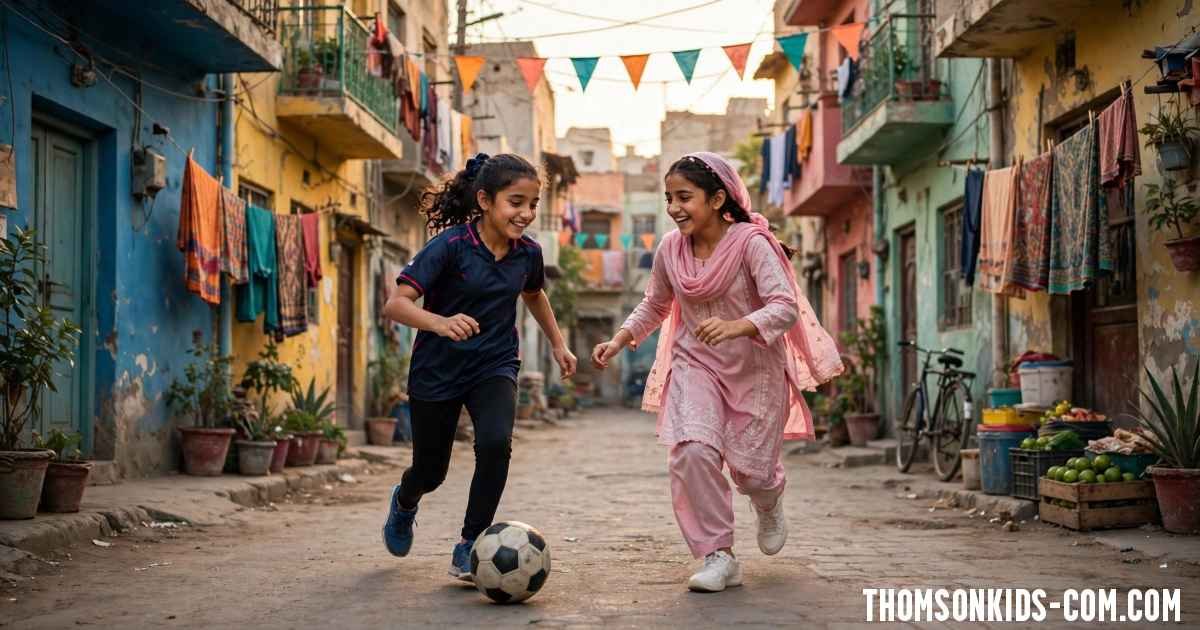
Mera Lyari movie is one of the most anticipated Pakistani films of 2026, earning praise even before its nationwide release for telling a powerful and authentic story about one of Karachi’s most historic neighborhoods. Rather than focusing on the familiar narrative of crime and violence, the film shines a light on hope, football, women’s empowerment, culture, and resilience.
Written and directed by Abu Aleeha and executive produced by Ayesha Omar, Mera Lyari movie aims to challenge long-standing stereotypes surrounding Lyari by presenting the community through the experiences of its people. Featuring a cast that includes many real residents of Lyari, the movie has already attracted international attention with its premiere at the UK Asian Film Festival 2026.
If you’re searching for the Mera Lyari movie story, cast, release date, official trailer, reviews, or why it is being called Pakistan’s answer to Dhurandhar, this complete guide covers everything you need to know.
What Is Mera Lyari movie About? The Complete Story Explained
At its heart, Mera Lyari is a story about dreams, courage, football, and breaking social barriers.
The film follows a disabled football coach, portrayed by Ayesha Omar, who returns to her hometown of Lyari after many years away. Determined to inspire the next generation, she organizes football trials for girls living in the community.
Among those hoping for a better future are:
- Afsana (Dananeer Mobeen), who secretly pursues football despite her father’s strict opposition.
- Kushmala (Trinette Lucas), who dreams of escaping a forced marriage by following her passion for the sport.
Training in secret under their coach’s guidance, the girls fight social expectations while pursuing the opportunity to represent Pakistan at the national level.
Unlike many previous portrayals that reduced Lyari to stories of gangs and violence, Mera Lyari movie intentionally presents another side of the neighborhood—one filled with talent, vibrant culture, community spirit, resilience, and sporting excellence.
Executive Producer Ayesha Omar summarized the film’s message by explaining that even during Lyari’s most difficult years, there were countless inspiring stories of hope, courage, determination, and perseverance that deserved to be told.
Mera Lyari movie Cast and Crew: Authentic Storytelling with Real Lyari Residents
One of the film’s greatest strengths is its authenticity.
Director Abu Aleeha revealed that approximately 80% of the cast consists of actual residents of Lyari, including supporting actors, local football players, and even the film’s male lead.
Main Cast
- Ayesha Omar as the disabled football coach
- Dananeer Mobeen as Afsana
- Trinette Lucas as Kushmala
- Shoaib Hassan as the male lead from Lyari
- Samiya Mumtaz
- Nayyar Ejaz
- Paras Masroor
- Adnan Shah Tipu
Crew
- Writer: Abu Aleeha
- Director: Abu Aleeha
- Executive Producer: Ayesha Omar
- Production House: Hawksbay Productions
This commitment to casting local residents gives the film an authenticity rarely seen in mainstream cinema.
Lyari itself has produced numerous athletes, footballers, musicians, poets, artists, and boxers who have proudly represented Pakistan on international stages. Instead of treating these achievements as background details, Mera Lyari places them at the center of its narrative.
Mera Lyari movie Release Date, Premiere & Official Trailer
After several production delays, Mera Lyari is finally reaching audiences in 2026.
Important Dates
- Official Trailer Released: April 2026
- World Premiere: May 2, 2026
- Festival: 28th UK Asian Film Festival
- Venue: British Film Institute (BFI), Southbank, London
- Pakistan Nationwide Release: May 8, 2026
The official trailer immediately generated significant discussion online.
Its powerful tagline—
“A story of courage, resilience and the will to rise—no matter the odds.”
—perfectly reflects the film’s uplifting message.
The trailer showcases emotional family conflicts, determined young athletes, football training, and the colorful streets of Lyari, creating excitement among audiences both in Pakistan and internationally.
Is Mera Lyari Pakistan’s Answer to Dhurandhar?
One of the biggest discussions surrounding Mera Lyari has been comparisons with Ranveer Singh’s Dhurandhar.
Following the release of Dhurandhar, some viewers criticized its depiction of Lyari as primarily a place associated with conflict and crime.
As a result, many media outlets began referring to Mera Lyari movieas Pakistan’s response to Dhurandhar.
However, the filmmakers have offered a different perspective.
Executive Producer Ayesha Omar has emphasized that the film was never intended as a direct response to another movie.
Instead, she explains that:
“Mera Lyari doesn’t aim to counter any film. It simply tells its own truth, from within the community, with honesty and responsibility.”
Rather than denying Lyari’s difficult history, the film focuses on the many inspiring stories that have often been overlooked.
It asks an important question:
What happened to all the stories of hope, achievement, sports, music, art, and resilience that also define Lyari?
Sindh Senior Minister Sharjeel Memon also praised the film, describing it as an opportunity to present a more balanced and authentic image of Lyari to both national and international audiences.
Why Mera Lyari Is One of Pakistan’s Most Important Films of 2026
Several factors make Mera Lyari stand out among Pakistani films released this year.
1. Female Empowerment
The movie tells the inspiring story of two young women determined to overcome family pressure, social expectations, and forced marriage through sport.
Their journey highlights themes of confidence, independence, and opportunity.
2. Authentic Representation of Lyari
Rather than relying on stereotypes, the film celebrates:
- Culture
- Music
- Community
- Sports
- Diversity
- Everyday life
It portrays Lyari as a place full of talent and resilience.
3. Real Locations and Local Talent
Much of the film was shot in the actual streets of Lyari using local actors and football players, giving every scene greater emotional realism.
4. Football as a Symbol of Hope
Football has long been one of Lyari’s strongest sporting traditions.
The movie uses the sport not only as entertainment but also as a symbol of opportunity, unity, and positive social change.
5. International Recognition
Premiering at the UK Asian Film Festival at London’s prestigious British Film Institute (BFI) demonstrates the film’s international appeal and artistic quality.
Early Reviews, Festival Buzz & Audience Expectations
Although Mera Lyari movie had not yet reached nationwide cinemas when early reactions emerged, festival audiences and critics responded positively.
Many early viewers described the film as:
- Emotional
- Powerful
- Inspiring
- Authentic
- Hopeful
Critics particularly praised its focus on ordinary people whose stories have rarely appeared on screen.
Many reviewers believe the film has the potential to reshape public perceptions because cinema plays an important role in influencing how communities are viewed around the world.
Fans of inspirational sports dramas such as Chak De! India and Dangal are expected to appreciate Mera Lyari’s uplifting storytelling and emotional depth.
Final Verdict
Mera Lyari (2026) is much more than a sports drama. It is a heartfelt celebration of identity, courage, football, women’s empowerment, and community resilience. Through authentic storytelling, real Lyari residents, and emotionally powerful performances, the film offers audiences a perspective that has long been missing from mainstream portrayals of the neighborhood.
Instead of defining Lyari through conflict, Mera Lyari highlights the dreams, determination, and achievements of its people, proving that hope can thrive even in the face of adversity. Its international premiere at the UK Asian Film Festival, combined with its nationwide Pakistani release, has positioned it as one of the country’s most significant cinematic releases of 2026.
Whether you’re passionate about Pakistani cinema, sports dramas, or inspiring stories of perseverance, Mera Lyari is a film worth watching. It reminds audiences that every community has stories of resilience waiting to be told—and that authentic storytelling can change perceptions far beyond the screen.